Introduction
Furniture dismantling and assembly for moves means taking large pieces apart, such as beds, wardrobes, and tables, before they leave your home, then rebuilding them in your new place. It protects the furniture, saves your walls and stairwells from scrapes, and makes loading faster. The cost depends mainly on the piece, how complex it is, and how easy the building is to access.
In Beirut, where many apartments have narrow stairwells, small lifts, and tight turns, this service is often the difference between a wardrobe fitting through the door and getting stuck on a landing. Here is what the service covers, what changes the price, and how to get ready.
What Does Furniture Dismantling and Assembly Include?
A proper service is more than loosening a few screws. When a skilled crew handles it, the job usually covers these steps:
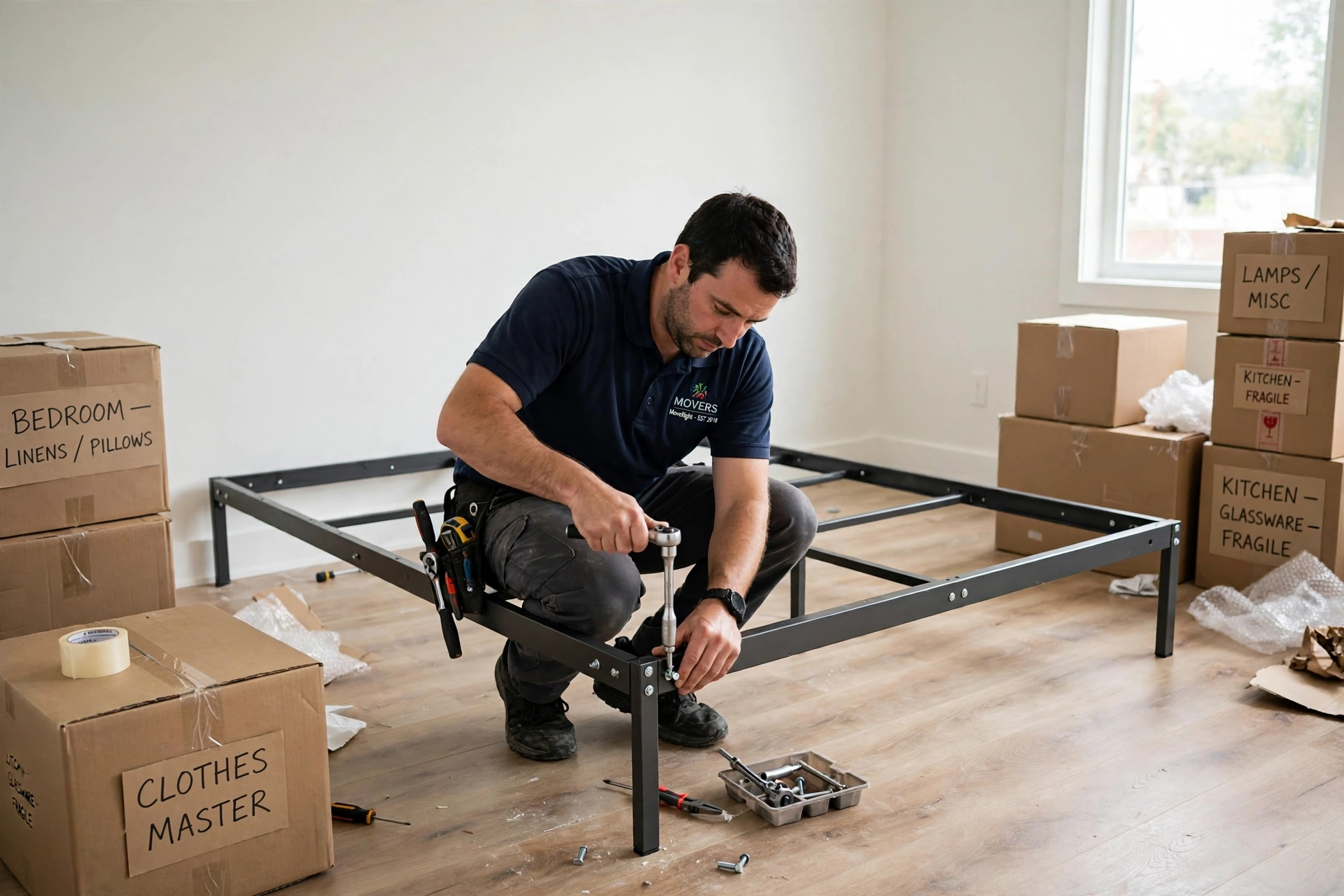
- Dismantling: removing legs, doors, shelves, drawers, rails, headboards, and panels in the right order.
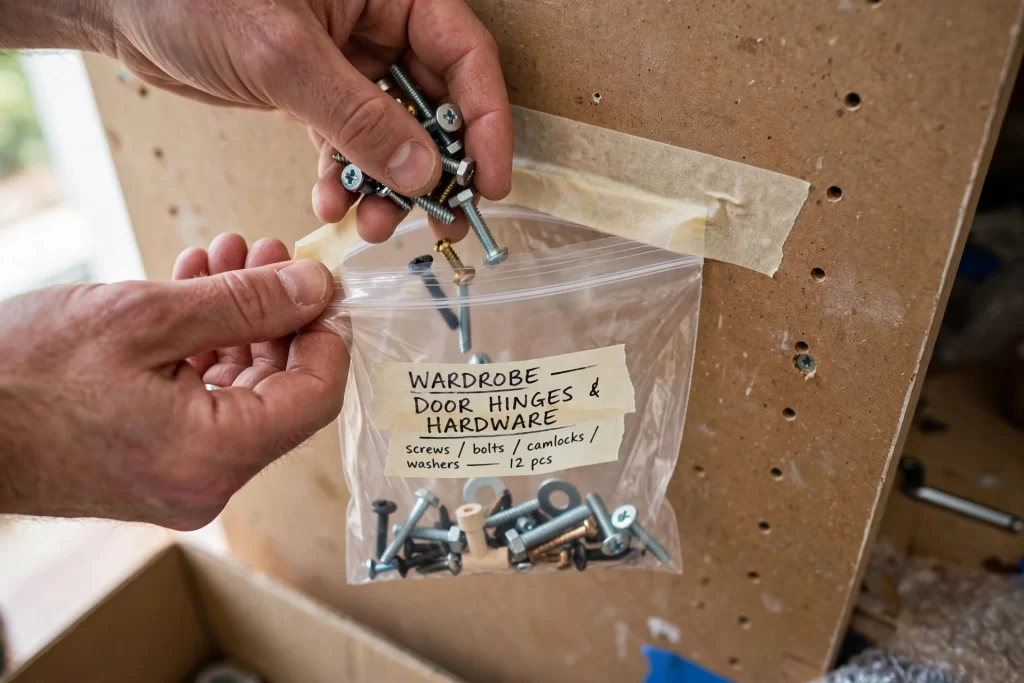
- Protecting the parts: wrapping panels, mirrors, and glass, and bagging screws, bolts, and hinges so nothing goes missing.
- Loading and transport: carrying the flat, protected pieces down and securing them in the truck.
- Reassembly: rebuilding each piece at your new home, tightening it properly, and checking that doors and drawers close smoothly.
- Placement: setting the furniture in the room and position you choose.
Some jobs sit outside a standard dismantling and assembly service, so confirm them in your quote. Examples include wall-mounting a TV, drilling into walls, electrical connections, plumbing, and removing or installing built-in kitchen cabinets.
Who Needs This Service?
Most people who book it fall into a few groups. Families moving out of an apartment with big beds and full-size wardrobes. People moving to an upper floor in a building with a small lift or none at all. Anyone with a lot of flat-pack furniture who does not want to spend a weekend with an Allen key.
Businesses use it too. An office move often means desks, partitions, and shelving units that must come apart on Friday and be working again by Monday morning.
What Do People Want to Know Before Booking?
Most readers searching this topic are asking four things: is it worth paying for, can I do it myself, how much will it cost, and what happens if something breaks?
The short answers are: it is worth it for large or complex pieces; doing it yourself works for simple furniture; the cost depends on a handful of clear factors; and a reliable mover should have insurance and tell you honestly which pieces carry a risk.
How Much Does Furniture Dismantling and Assembly Cost?
There is no single flat rate. Moving prices in Lebanon can shift with fuel and labor costs, so rely on a current quote instead of an old figure you found online. What stays constant is what drives the price:
- Number of pieces: ten items take longer than three.
- Complexity: a wardrobe with sliding doors and mirrors takes far more care than a basic bed frame.
- Time on site: both taking apart and rebuilding count, and rebuilding often takes as long as dismantling.
- Access: high floors, no lift, narrow stairs, and long carrying distances add effort.
- Bundling: adding the service to a full move is usually simpler to price than booking it on its own.
This table shows how much work different pieces usually involve:
| Furniture piece | Typical effort | Why |
|---|---|---|
| Basic bed frame | Low | A few bolts and slats |
| Dining table | Low to medium | Legs, and sometimes a heavy glass top |
| Desk and shelving | Low to medium | Many small parts and fittings |
| Sofa or sectional | Medium | Detachable legs and connected sections |
| Wardrobe with doors and mirrors | High | Doors, rails, back panels, and glass |
| Large modular units | High | Many panels that must be rebuilt in order |
The most accurate way to get a price is an inspection. Auto Ammar offers a free inspection, so the crew can see your furniture and your building access before giving you a figure.
Why Taking Furniture Apart Is Worth It: A Real Example
A few years ago I helped a cousin move out of a third-floor apartment in Hamra. His wardrobe was too tall for the lift, so we tried to carry it down the stairs in one piece. It wedged at the second landing, scraped the wall, and cracked one of the door panels.
The next day a crew came, took the wardrobe apart in under half an hour, and carried it down flat. Nothing else got damaged. That is when I understood that dismantling is not an extra. It is protection for the furniture and for the building.
How Dismantling and Assembly Works on Moving Day
A well-run job follows a clear order, and knowing it helps you spot a careless crew:
- Inspect: the crew checks each piece, the door sizes, and the route out of the building.
- Photograph and label: parts are marked so every panel and screw has a place.
- Dismantle and bag hardware: screws and fittings go into labelled bags, taped to the piece they belong to.
- Wrap and load: panels, glass, and corners are padded and loaded flat.
- Reassemble: at the new home, the piece is rebuilt, leveled, and tested.
If you want this handled by professionals as part of your move, you can read about our dismantling and assembly service.
Practical Tips Before Moving Day
A little preparation makes the job faster and cheaper.
- Empty everything. Clear drawers, shelves, and wardrobes completely. Loose items add weight and can damage the piece.
- Take photos and measure. Photograph each large piece and measure doors, stairwells, and the lift. Share these when you request a quote.
- Keep manuals and extra parts. If you still have assembly instructions for flat-pack pieces, set them aside for the crew.
- Point out fragile or old furniture. Antique, veneered, or already-wobbly pieces need extra care, and the crew should know in advance.
- Plan the new layout. Decide where each piece goes so it is assembled once in the right room.
- Keep a small bag of essentials. Tools you need that day and valuables stay with you, not in the truck.
Mistakes and Things to Know
Assuming everything can be taken apart. Flat-pack furniture is designed to be assembled once. Each time it is taken apart, the screw holes in particleboard wear down, and the piece can wobble when rebuilt. You can read more about how flat-pack furniture is designed. A good crew will tell you honestly if a cheap piece may not survive the move.
Dismantling the day before with no labels. Without photos or labelled bags, rebuilding turns into a puzzle that costs time.
Forgetting built-in or glued pieces. Some furniture was never meant to come apart. Mention these early so the crew can plan around them.
Choosing only on price. A low quote with no insurance and no inspection can cost far more if a wardrobe is damaged. Ask what is covered before you agree.
Not agreeing on the scope in writing. Confirm which pieces are included, whether reassembly is part of the price, and what happens if more items are added on the day.
FAQs
There is no fixed rate. The price depends on how many pieces you have, how complex they are, the floor and access, and whether the service is part of a full move. A free inspection gives you the most accurate quote.
Not always. Some movers include it, while others charge it separately. Ask for it to be written clearly in your quote, including whether reassembly at the new home is covered.
Most can. Beds, tables, wardrobes, desks, and shelving come apart easily. Glued, built-in or very old pieces may be risky, and a good crew will tell you before touching them.
Simple pieces such as a bed frame often take minutes. Large wardrobes, sectionals, and modular units take longer, and rebuilding usually takes about as long as taking them apart. The crew can give a better estimate after seeing your furniture.
For simple pieces like a basic bed or table, it can work if you have the right tools and keep every screw. For wardrobes, glass pieces, and large units, hiring a professional crew is safer and often saves time.